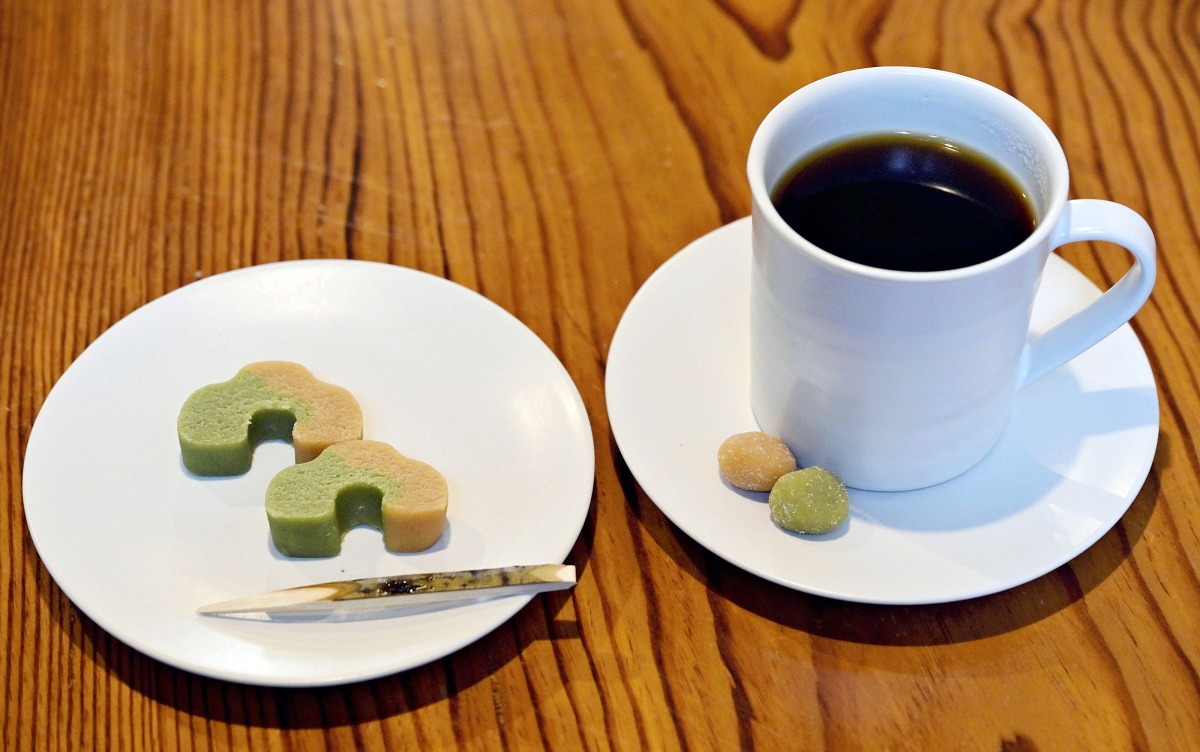
A set option at the shop that comes with coffee, Kasuga no mame and slices of suhama.
Kyoto: Near the Kyoto Gyoen National Garden lies the traditional Japanese sweets shop Suhamaya. In the shop’s display window facing Marutamachi Street, passersby can see a confection known as "suhama,” which has a unique design inspired by the shape of a beach.
Suhama is said to have originated in Kyoto more than 700 years ago.
The shop's owner, Ryoko Yoshino, 30, first encountered the confection as a child. It was served alongside matcha by her father, Soshun Yoshino, at the New Year's tea ceremony held in their home's tearoom every year.
In Japan, the three main schools of tea ceremony are descended from Sen no Rikyu, who perfected the Japanese tea ceremony in the 16th century. Soshun, now 65, is a master instructor at Mushakoji Senke, one of these schools.
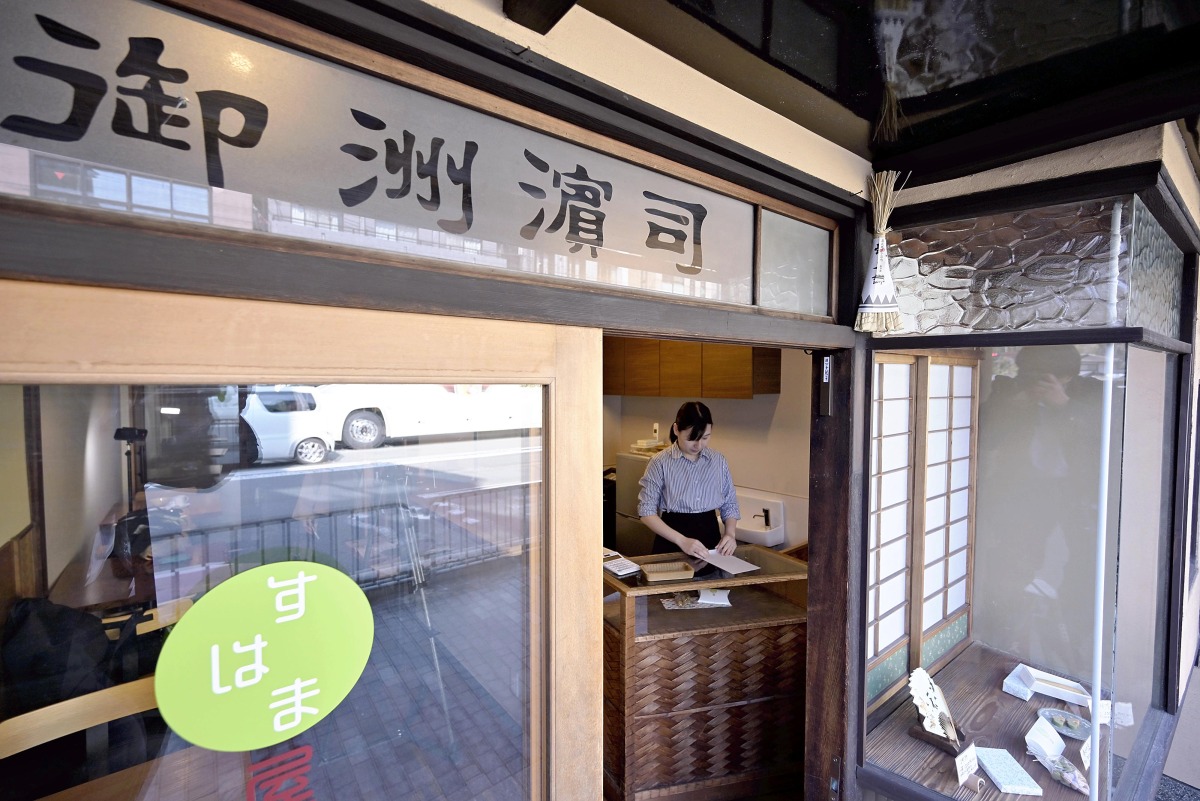
The words "On-Suhama Tsukasa” are written above the entrance to Yoshino’s shop.
Suhama is made by kneading a mixture of lightly roasted soybean flour, mizuame syrup and sugar, and then shaping it into a log. It is sliced before serving.
Yoshino used to like eating the trimmed ends of suhama.
"It was sweet, but not overly," Yoshino said. "I loved how the simple, earthy flavor of the soybeans gently filled my mouth."
The confection that Yoshino's father used to serve at the tea ceremony was made by On-Suhama Tsukasa - Uemura Yoshitsugu, a confectionery founded in 1657. Yoshio Uemura, the 14th-generation proprietor of the shop, had been delivering suhama to the Yoshino family since Yoshino's great-grandfather's time. However, Uemura closed the shop in 2016 after 360 years in business when he fell ill in his late 70s and had no successor.
Yoshino's father lamented the loss and asked Uemura to keep the tradition alive somehow. Yoshino, a third-year student at Kyoto Prefectural University at the time, felt the same way.
"Why don't you try making it yourself?" Uemura suggested.
A big response
Yoshino and her father began to learn together from Uemura. They visited his home, where they were taught how to knead the ingredients together and shape the paste using a bamboo rod.
Yoshino would try making suhama herself and deliver it to Uemura once or twice a month. Each time, she received advice and continued to practice.
About a year later, she managed to win Uemura's praise. "This is good enough to serve to customers," said Uemura.
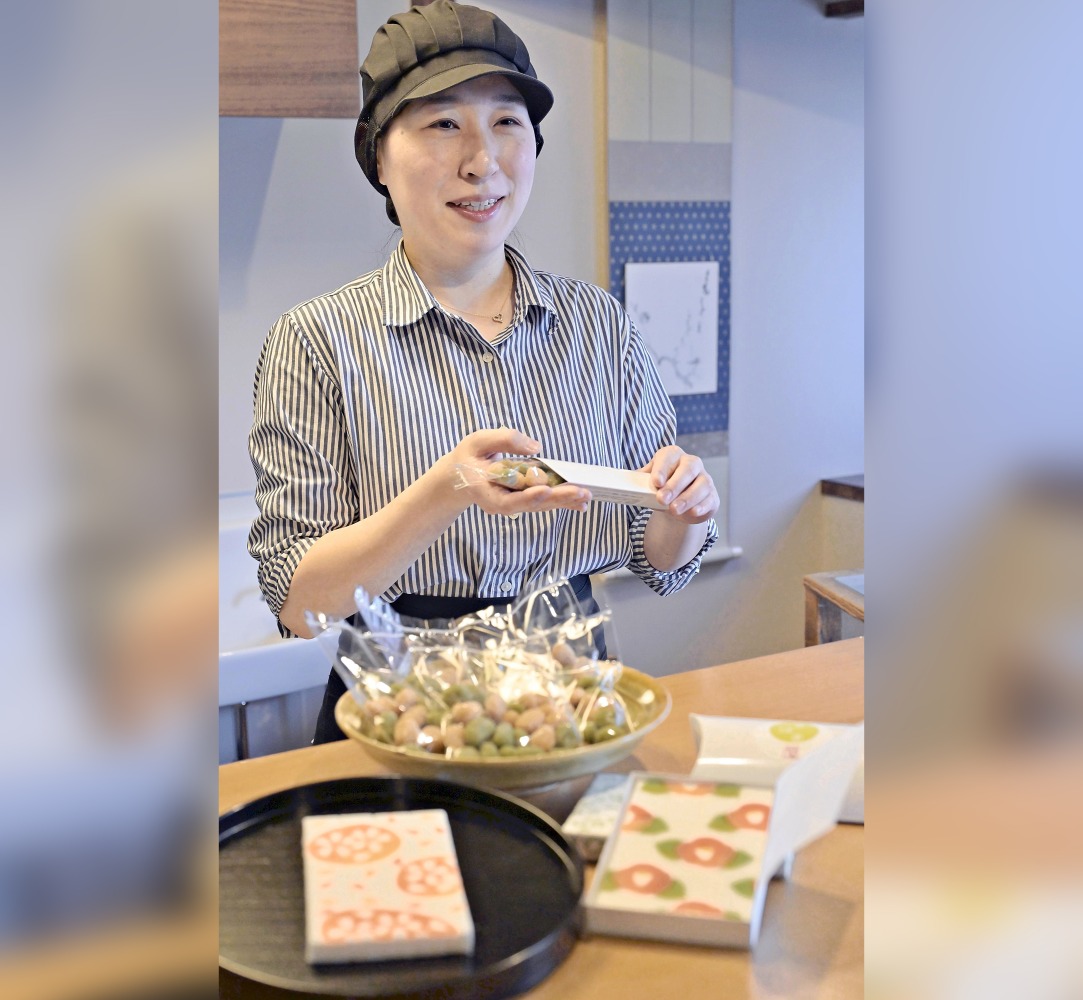
Ryoko Yoshino packages Kasuga no mame, or suhama shaped to resemble beans, in her shop in Nakagyo Ward, Kyoto.
Yoshino's suhama was first served at her father's New Year's tea ceremony in 2018. The guests were overjoyed. "I never thought I'd be able to taste this again," said one attendee.
Although Yoshino had been studying bacteriology in university and had considered pursuing a graduate degree, she opted instead to further her studies of suhama and its tradition.
Uemura was delighted to hear of Yoshino's decision and agreed to lease her his vacant shop space.
In November 2018, after graduating from university, Yoshino opened Suhamaya. Since then, she has strictly adhered to the traditional methods for making suhama that she learned from Uemura.
"I want to get as close as possible to the original flavor," she said.
Now with a cafe
Yoshino has added a cafe to the shop. The menu features a Suhama Set, which includes two slices of suhama and coffee, matcha or black tea. Uemura recommended that coffee be an option, as he said, "it goes well with suhama."
Customers will see the display window, walk in and ask, "What is suhama?" Many of them try the sweet with coffee and discover a fondness for it.
Yoshino's suhama is also served at tea ceremony events at elementary schools. Some of the students who participated in these events have visited her shop with their parents. "I came because the suhama was so good," said one.
"Hopefully the appeal of suhama reaches people who didn't know about it before," said a smiling Yoshino.
The shop has also carried on the tradition of Kasuga no mame, bite-size pieces of suhama, and oshimono, a dry sweet made with the traditional confection rakugan and decorated on top with various seasonal motifs using suhama. These motifs change monthly and include camellias, bracken sprouts and cherry blossoms.
Yoshino's shop and products have gradually become more widely known over the eight years since she opened.
In recent years, she has received orders for oshimono with original designs to be used as commemorative gifts for weddings and noh performances. "I hope to continue creating designs in my own style," she said.
Although Yoshino felt pressured to carry on the taste of a 360-year-old tradition, she overcame the pressure with the words of encouragement that Uemura gave her.
"You've been eating this since you were little, so if you think it tastes good, it's fine," she remembers him saying.
With this in mind, she continues to share this nostalgic and comforting treat.