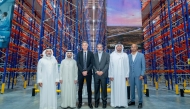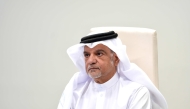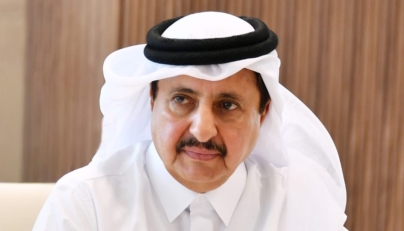
Doha,. Qatar: Qatar Chamber (QC) and the Ministry of Transport (MOT) have signed a strategic partnership agreement for the upcoming FIATA RAME 2026 Conference, taking place on November 9–10, 2026, at the Sheraton Grand Doha Resort & Convention Hotel. Under the agreement, the Ministry will serve as the Strategic Partner for the event, which expects widespread participation from local, regional, and international freight forwarding and logistics leaders. Held under the patronage of the Prime Minister and Minister of Foreign Affairs,H E Sheikh Mohammed bin Abdulrahman bin Jassim Al Thani, the conference is organised by Qatar Chamber via the Qatar Association for Freight Forwarding and Logistics (QAFL), in cooperation with the Federation of GCC Chambers. QC Chairman, Sheikh Khalifa bin Jassim bin Mohamed Al Thanipraised the Ministry of Transport’s support for the conference as a strategic partner. He said this partnership provides immense value to the event and underscores the State’s dedicated efforts to advance the logistics sector and enhance the public-private partnership. He noted that the conference comes at a particularly important time amid current regional and global developments. He added that its key themes, including sustainability, green transport, digital transformation, innovation, supply chains, and specialised logistics services, are aligned with global trends and Qatar’s vision of building a diversified and sustainable economy. Sheikh Khalifa expressed his appreciation to the Ministry of Transport for its support, affirming that cooperation between Qatar Chamber, the Ministry, and key stakeholders exemplifies an effective public-private partnership model that elevates Qatar’s standing as a global transport and logistics hub. The sessions will address a range of key topics reflecting the rapid developments in the logistics sector, including sustainability and green transport, digital transformation, innovation, supply chains, specialised logistics services, e-commerce, air freight, insurance, and risk management in logistics projects. The event will also feature a specialised logistics exhibition, providing Qatari, Gulf, and regional companies operating in the freight and logistics sector with an opportunity to showcase their services and solutions, engage with international participants and delegations, and establish new partnerships and alliances.
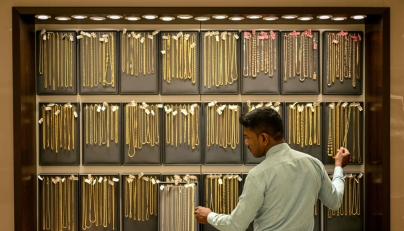
Singapore:Gold extended declines on Monday, hitting its lowest in nearly two weeks after US Federal Reserve Chair Kevin Warsh signaled that interest rate hikes may be needed to contain inflation. Spot gold fell 0.8% to $4,417.04 per ounce, hitting its lowest since August 19. Prices fell more than 3% on Friday. US gold futures for December delivery declined 1.4% to $4,466.80. Among other metals, spot silver fell 0.4% to $66.10 per ounce, platinum declined 1.3% to $1,797.03 and palladium slipped 2.5% to $1,386.96.
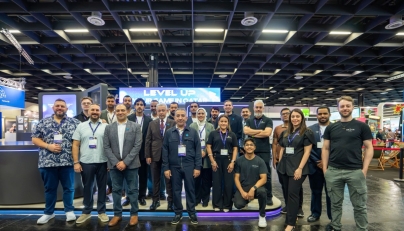
Doha, Qatar: Invest Qatar, the Investment Promotion Agency of Qatar, and Media City Qatar have concluded a successful participation at Gamescom 2026 in Cologne, Germany, where a joint Qatar pavilion attracted strong interest from international gaming companies, developers, publishers and investors. Held annually in Cologne, Gamescom is one of the world’s leading gaming events, bringing together developers, publishers, investors and creators from across Europe and beyond. Qatar’s participation reflects its strategic focus on building a competitive, innovation-led ecosystem for gaming and interactive media. Throughout the event, the Qatar pavilion served as a platform for business engagement, hosting a series of meetings and discussions with global industry stakeholders exploring opportunities across game development, publishing, localisation, esports and interactive media. The pavilion also highlighted success stories from Media City Qatar’s ecosystem through the participation of six Qatar-based companies operating across game development, esports, publishing and gaming innovation. This includes COREGAME Studios, developer of Khawi and Beyond Solar; Mezan Studios, developer of Nightscape; Digital Dunes, the publisher behind Project Soccer Legends (PSL); Digit Ink, a mobile game and animation development studio headquartered in Doha; SekGames, a mobile game studio and publisher based in Qatar with over 10 million downloads worldwide; and Jumbo!, an action-platformer adventure game developed in Qatar by Tawar Games. Their presence showcased the growing depth and diversity of gaming activity in Qatar and the wider region. Invest Qatar and Media City Qatar showcased the country’s welcoming business ecosystem, offering streamlined market entry, competitive incentives and access to a network of partners across media, technology and innovation. The participation also highlighted Qatar’s continued investment in gaming culture, talent development, esports and community engagement.
 Ministry of Transport supports FIATA RAME 2026 as strategic partner
Doha,. Qatar: Qatar Chamber (QC) and the Ministry of Transport (MOT) have signed a strategic partnership agreement for the upcoming FIATA RAME 2026 Conference, taking place on November 9–10, 2026, at the Sheraton Grand Doha Resort & Convention Hotel. Under...
 Kuwaiti oil price rises $2.88 to $87.44 a barrel
Kuwait: The price of Kuwaiti oil rose by $2.88 to $87.44 a barrel in Friday's trading, compared with $84.56 a barrel in Thursday's trading, according to the price announced by the Kuwait Petroleum Corporation (KPC). In global markets, Brent crude...
Gold hits near two-week low, reaching $4417.04 per ounce
Singapore:Gold extended declines on Monday, hitting its lowest in nearly two weeks after US Federal Reserve Chair Kevin Warsh signaled that interest rate hikes may be needed to contain inflation. Spot gold fell 0.8% to $4,417.04 per ounce, hitting its...
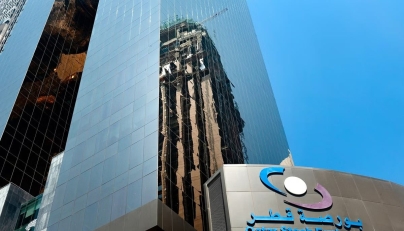 QSE index opens higher
Doha, Qatar: The Qatar Stock Exchange (QSE) index rose0.27% at the start of Sunday's trading session, gaining 26.46 points from the previous session's close to reach 9,902 points, supported by six sectors. QSE data showed gains in the sectors of...