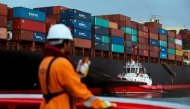
File photo
Doha, Qatar: Qatar is emerging as a critical stabilising force in global supply chains amid geopolitical tensions, with helium and sulphur helping to underpin the semiconductor and electric vehicle (EV) sectors, according to a recent report by Fitch Solutions.
As concerns grow over potential disruptions linked to US-Iran conflict, analysts at Fitch Solutions say Qatar’s continued output is likely to play “a significant role in cushioning global markets from more severe shocks in the near term.”
While Fitch expects the conflict to be short-lived, the report warns that Qatar’s strategic position could become increasingly important if tensions escalate.
The country supplies around one-third of global helium output, a critical input in semiconductor manufacturing, particularly for cooling processes in advanced chip production.
“Qatar may not always be front-of-mind in discussions about tech supply chains, but its role is absolutely fundamental,” said James B Andrews, a senior commodities analyst. “Helium is irreplaceable in many semiconductor processes, and Qatar’s scale means it acts as a buffer for the entire system.”
Recent missile strikes have already led to the shutdown of roughly 17 percent of Qatar’s LNG output. In addition, any disruption to shipping routes through the Strait of Hormuz could complicate exports further, particularly to major semiconductor hubs such as South Korea and Taiwan, which rely heavily on Qatari supplies.
Despite these risks, industry experts say existing inventories and recycling mechanisms should prevent immediate shortages. “In the short term, the system is resilient,” Andrews said. “What we are more likely to see is cost inflation rather than outright supply disruption, especially for memory chips and mature-node semiconductors.”
The data indicated that these components are essential to modern vehicles, from traditional internal combustion engine models to electric and autonomous platforms, all of which are becoming increasingly chip-intensive.
Qatar’s importance extends beyond semiconductors as the country is also a major exporter of sulphur, a key feedstock in sulphuric acid used to refine battery metals.
The report mentions that this places it at a key junction in the global electric vehicle supply chain, particularly given China’s dominant role in battery material processing and its reliance on Middle Eastern sulphur imports.
“Qatar’s sulphur exports are an underappreciated piece of the battery value chain,” Lina Zhou, a market expert, said. “They help enable the refining processes that ultimately feed into EV production worldwide.”
Fitch notes that in the near term, China’s stockpiles and vertically integrated supply chains should help absorb shocks, limiting the risk of immediate shortages.
However, prolonged disruption could push up costs across the battery ecosystem, eventually feeding through to automakers and consumers.
In the meantime, the outlook remains broadly stable as the data forecast global EV sales growth of 7.2 percent in 2026 and 9.8 percent in 2027, supported by steady demand and supply chain adaptability.
However, analysts caution that a prolonged conflict would shift the balance of risks. In such a scenario, Qatar’s dual role as a supplier of helium and sulphur could transform it from a stabiliser into a critical chokepoint, shaping the automotive innovation ahead,” Zhou added.