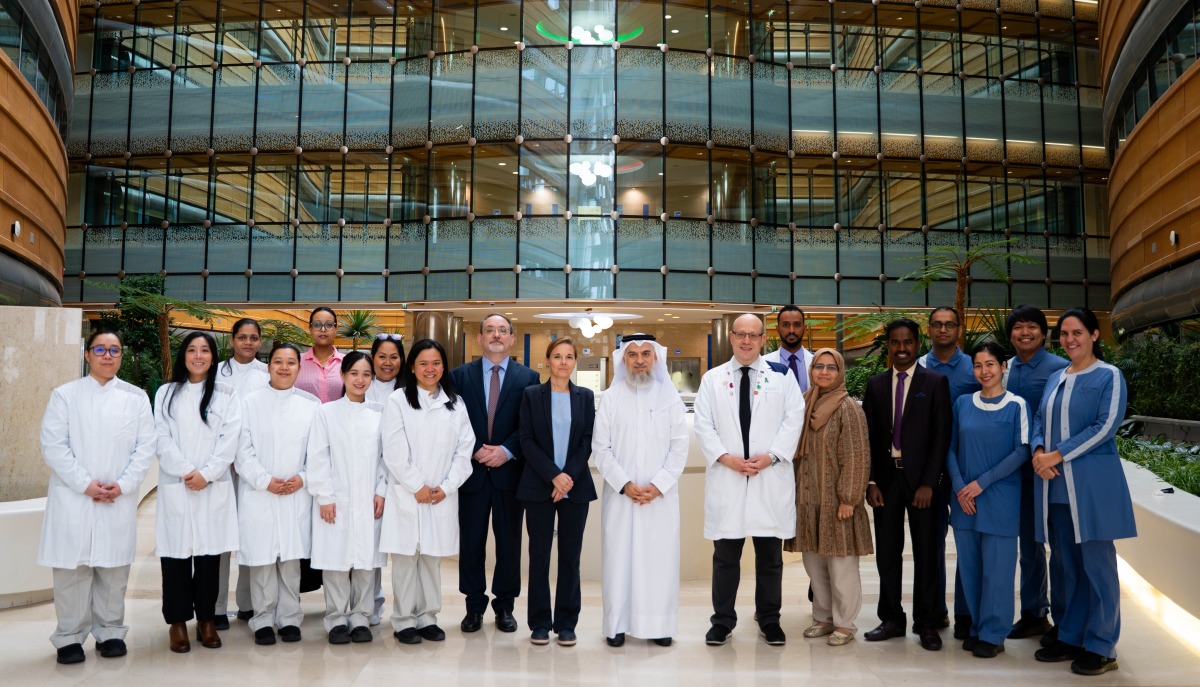
Dr. Chiara Cugno (centre) with the Hematology and Oncology and GMP facility teams at Sidra Medicine.
Doha, Qatar: A major step forward in treating inherited blood disorders in Qatar Sidra Medicine a member of Qatar Foundation is now offering a new gene therapy to eligible patients. The hospital has been qualified by Vertex Pharmaceuticals to administer Casgevy, a one-time treatment designed for patients aged 12 and above living with transfusion-dependent beta thalassemia (TDT) and severe sickle cell disease (SCD).
The therapy, approved by the Ministry of Public Health as well as global regulators including the US Food and Drug Administration and the European Medicines Agency, is the first CRISPR/Cas9 gene-editing treatment of its kind in Qatar. Known as Casgevy, it targets the root genetic cause of these conditions and has shown the potential to free patients from lifelong treatments such as regular blood transfusions.
“The availability of Casgevy in Qatar represents a transformative step toward curative treatment for sickle cell disease and transfusion-dependent thalassemia,” Acting Chief of Pediatric Hematology, Oncology and Bone Marrow Transplant and Director of the Advanced Cell Therapy Core at Sidra Medicine, Dr. Chiara Cugno told The Peninsula.
Casgevy is a one-time, CRISPR/Cas9 -based gene therapy treat the root cause of severe sickle cell disease and Transfusion-dependent beta thalassemia. It can lead to sustained reductions in pain crises for severe sickle cell patients and transfusion dependence for beta thalassemia patients. The treatment process is complex and access to the treatment is currently limited to few specialised centers in the world, including Sidra Medicine.
Dr. Cugno explained that the therapy reflects years of preparation and investment in specialised care.
“Casgevy is more than a new treatment; it is a statement about the kind of children’s hospital Sidra Medicine intends to be.
“We have spent years building the infrastructure, a GMP cell processing facility, the Advanced Cell Therapy Core, an established transplant programme, and multidisciplinary teams that support these patients through a complex, months-long journey,” Dr. Cugno said.
“Adding a one-time CRISPR gene therapy consolidates a full continuum of care and positions Sidra Medicine as a clinical leader, a research hub, and a national partner in Qatar’s vision for precision medicine.”
On Qatar’s growing role in advanced therapies, Dr. Cugno highlighted the broader regional impact.
“Delivering Casgevy in Qatar is significant well beyond the walls of Sidra Medicine,” she said. “For decades, families had to travel abroad to access advanced treatments. Having this therapy available locally represents a shift in how advanced medicine is delivered in the Gulf. It positions Qatar as a destination for cell and gene therapy rather than a point of departure.”
The inherited blood disorders beta thalassemia and severe sickle cell disease result from mutations in the beta-globin gene, which encodes a key component of hemoglobin, the oxygen-carrying molecule in blood. Both diseases currently require a lifetime of treatment and can result in reduced life expectancy.
Discussing the prevalence of these conditions, she pointed out that hemoglobinopathies remain among the most common inherited disorders in the region. “In Qatar, beta thalassemia is more common, and premarital screening has helped reduce severely affected births,” she said.
“At Sidra Medicine, we follow approximately 150 to 200 children with transfusion-dependent thalassemia and sickle cell disease. Not all require gene therapy, as many respond well to existing treatments.”
However, she emphasised that Casgevy is intended for the most severe cases. “It is reserved for patients still experiencing frequent pain crises, stroke risk, or the cumulative burden of lifelong transfusions despite best medical care. For this group, gene therapy offers a one-time intervention aimed at the root cause.”
Explaining the selection process, Dr. Cugno said, “At this stage, the treatment is offered to Qatari nationals aged 12 years and older with severe disease. Candidates are identified through our Hematology clinic, where a multidisciplinary team carefully evaluates each case. Families are counselled in depth about a journey that spans several months.”
She added that outcomes seen globally have been highly encouraging. “In the pivotal sickle cell trial, approximately 97 percent of patients were free of vaso-occlusive crises for at least a year, and virtually all thalassemia patients became transfusion-independent, with benefits lasting beyond five years of follow-up,” she said.
Looking ahead, Dr. Cugno believes the therapy could significantly change patients’ futures.